Quantum-Resilient Stealth Networking
Invisible | Resilient | Sovereign Communications
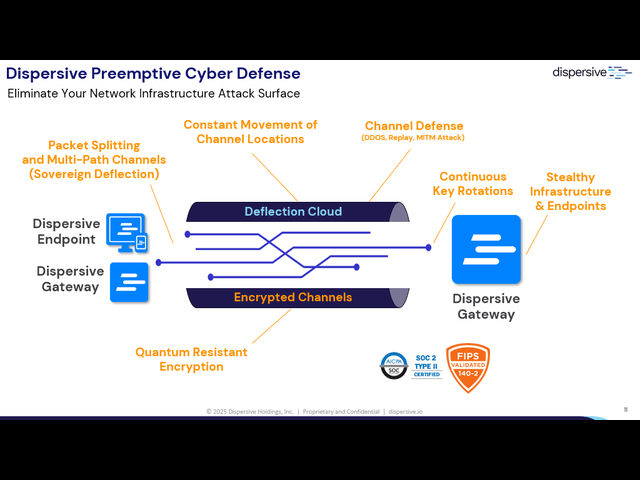
Dispersive® Stealth Networking secures the communication paths that connect users, applications, agents, models, and infrastructure. Post-quantum protection extends across the data plane and the control plane, covering both the traffic and the system that routes it. Sensitive communications become difficult to observe, correlate, or target. Dispersive is a software overlay that complements the security investments you have already made and runs on the infrastructure you already operate.
Invisible
Communications are fragmented and dispersed across dynamic, non-deterministic paths. No intercepted stream can be correlated back to a session, a source, or an identity. TLS fingerprint mitigation means sensitive traffic blends into ordinary web communications.
Resilient
Operations continue under disruption, degradation, and active attack. Paths roll during transmission rather than failing over after a break, so sessions survive link loss and congestion instead of recovering from them.
Sovereign
You control the transport plane. There are no external control-plane dependencies, and Dispersive runs over the transport you already have, including internet, 5G, VSAT, MPLS, and cloud backbone.
The convenience of the cloud
DispersiveCloud™
DispersiveCloud™ is a hosted solution that brings the power of Dispersive’s groundbreaking network fabric while simplifying the deployment and management process without compromising on performance or security. We operate on state-of-the-art cloud networks, partnering with Amazon Web Services and Azure.
Self-host for full control
DispersiveFabric TM
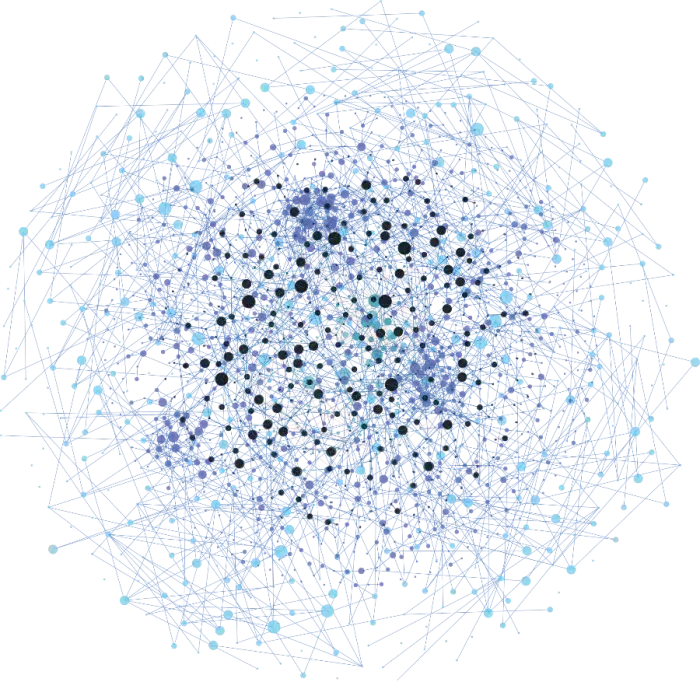
DispersiveFabric™ is our robust, flexible solution designed for larger, more complex environments. A software-defined overlay network, DispersiveFabric utilizes a microservices architecture to provide unparalleled security, reliability, and performance. Deployable on any type of infrastructure with infinite scale- public cloud, private cloud, containers, VMs, dedicated hardware.
Dispersive Stealth Networking Multi-Path/Multi-Cloud: Step by Step
Step 1
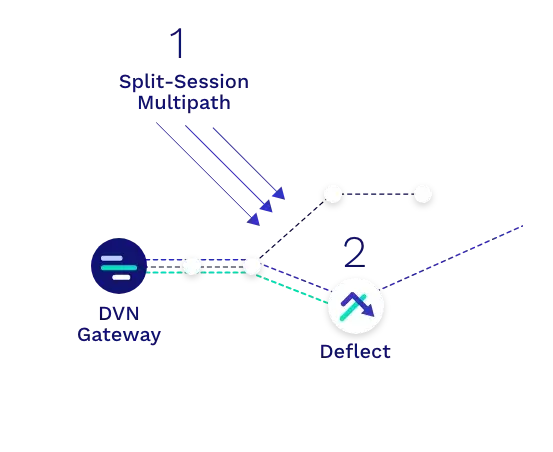
Split-Session Multipath
Data streams are split at the authenticated source and re-addressed with a Dispersive header to force traffic to follow different network paths based on instructions from the Dispersive Controller across one or more physical circuits.
Step 2
Data Deflections
The underlying IP networks deliver these packets to Dispersive software nodes known as Data Deflects. Placement of these deflects influences the actual physical paths traversed.
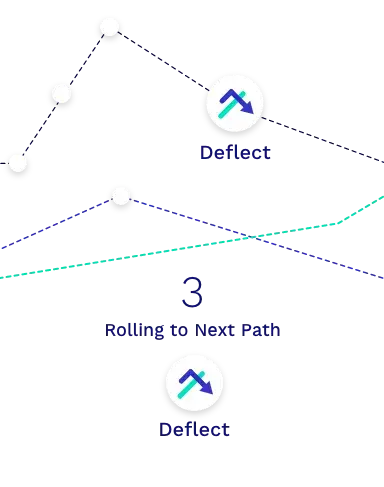
Step 3
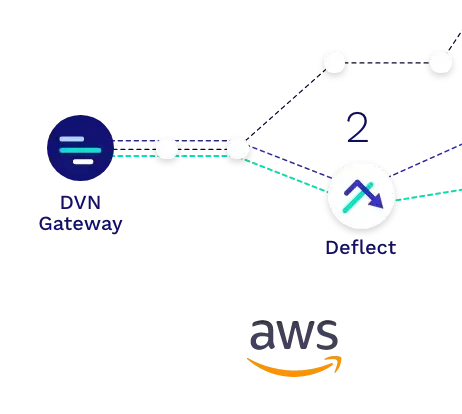
Rolling to Next Path
New paths can be established/rolled during the transmission enhancing performance by avoiding link failures and bypassing congested pathways.
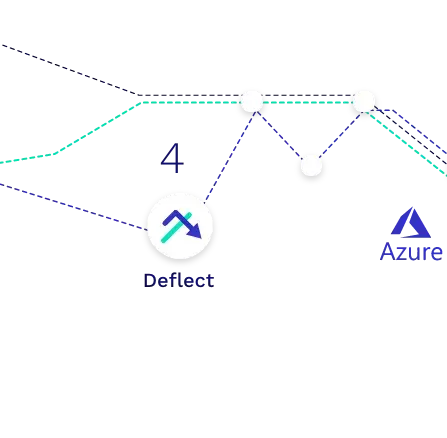
Step 4
Deflections Re-Address Packets
The deflects receive the packets and re-address them for the final destination.
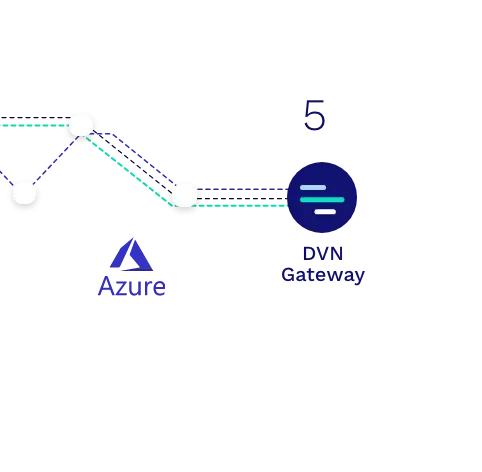
Step 5
Data Reassembled
The authenticated destination reassembles the split packet streams and strips out the Dispersive header information before passing the original packet to the receiving application. Missing packets are re-requested to ensure guaranteed packet delivery.
Securing the AI Communication Layer
As AI moves into mission-critical workflows, organizations are creating machine-to-machine communication paths that legacy VPN, ZTNA, and SD-WAN architectures were not designed to protect. Large language models, multi-agent systems, and GPU clusters generate traffic that carries more than sensitive data. It carries instructions, context, and autonomous decisions. A compromised exchange between two agents is not only a data breach. It can become a compromised decision-making chain.
Dispersive protects those paths with dynamic, non-deterministic routing that resists correlation, interception, targeting, and side-channel exposure, the risk that observable metadata and traffic patterns reveal sensitive AI activity even when payloads remain encrypted.
How It Works: Preemptive Cyber Defense In Action
The Dispersive Platform is built for resilience, performance, and reliability in the most demanding network environments. Combining our deflection cloud, endpoint software, Zero Trust gateways, and egress gateways, we create an invisible, multi-path transport layer that preemptively neutralizes threats before they reach your network.
With Layer 2–4 transport, our technology ensures fail-safe operations, dynamic routing, and elegant failure resistance—delivering up to 10x better performance, 20% lower latency, and seamless connectivity even under attack.
Dispersive Network Architecture
See the topologies. Primary architecture across any combination of media, one-to-many, and full mesh, with the transport each one supports.
What Is Stealth Networking?
Understand the category. Why visibility is the vulnerability, and how traffic dispersion, dynamic multi-path routing, and endpoint obfuscation work together.
FAQs
Agent-to-agent and inference traffic carries instructions, context, and autonomous decisions, not only data. Dispersive disperses that traffic across dynamic, non-deterministic paths so it resists correlation, interception, and targeting. Version 6.0 adds TLS fingerprint mitigation to reduce observable metadata, and URL filtering to control which destinations agents are permitted to reach.
Dispersive extends post-quantum cryptography across the data plane and the control plane, incorporates cryptographic modules that are FIPS 140-3 validated, and supports NIST-standardized algorithms including ML-KEM and ML-DSA. Because protection is applied at the transport layer, organizations gain crypto agility without re-architecting applications. Federal agencies have post-quantum migration plans due October 22, 2026.
Dispersive extends zero trust. Identity-based controls decide who is allowed to connect. Dispersive operates after authentication, on the transport plane, and determines how the resulting traffic moves. It is designed to sit alongside existing security investments rather than displace them.
Yes. DispersiveCloud is a cloud-native deployment that integrates into hybrid and multi-cloud environments. DispersiveFabric deploys as software within infrastructure you already own. Neither requires a full network overhaul, and Version 6.0 is built for both complex legacy environments and AI-native architectures.
Dispersive is built for organizations where interception or disruption carries consequence: defense and intelligence, critical infrastructure, AI and GPU infrastructure, telecom and edge, and sovereign cloud. Financial services and healthcare organizations handling regulated data in motion see the same benefit.
Dispersive goes beyond VPNs and SD-WAN by using dynamic multi-path networking, which splits, encrypts, and transmits data across multiple unpredictable routes. This removes single points of failure, mitigates interception risk, and sustains resilient connectivity. It is not a VPN replacement exercise or an SD-WAN competitor. Dispersive operates as an additional transport layer alongside the network you already run.
IPSec tunnels create static, predictable paths. Dispersive obfuscates and disperses traffic across multiple dynamic pathways, which makes it substantially harder for an adversary to detect, intercept, or correlate sensitive data in transit.
Deploy Dispersive On Your Own Network
Customer briefings, evaluations, and demonstrations are available by request. Schedule a conversation with our team to see how Dispersive fits your environment and threat model.